



Industrial operations depend on components built to withstand constant mechanical stress and pressure. Heavy-duty applications require casting solutions that combine durability, accuracy, and repeatable quality. Across global manufacturing networks, vietnam die casting supports these demands through controlled engineering practices focused on long-term performance. Each component plays a direct role in maintaining stability within demanding operational environments.
Precision-Driven Foundations For Heavy Performance
Engineered casting solutions begin with a clear understanding of operational loads and usage conditions. Designers evaluate stress distribution to ensure parts perform reliably during extended service cycles. Geometry accuracy, material flow control, and tolerance management shape outcomes suited for high-demand machinery. These early decisions allow cast components to maintain performance consistency even under continuous operational strain.
Material Integrity Supporting Operational Demands
Material integrity remains central to every heavy-duty casting application. Alloy selection reflects requirements for strength, wear resistance, and thermal stability under load. Each formulation supports consistent behavior during prolonged industrial use.
- High tensile alloys resist mechanical deformation
- Thermal stability preserves dimensional consistency
- Corrosion resistance extends service longevity
- Balanced composition improves structural predictability
These material characteristics reduce degradation during long service intervals. Maintenance planning becomes more reliable as components retain their mechanical properties. Operational continuity improves when material performance remains stable over time.
How Do Cast Components Handle Extreme Loads?
Extreme loads place continuous stress on internal structures and connection points. Engineered castings manage these conditions through reinforced geometries and optimized wall thickness. Controlled solidification reduces internal stress, supporting durability during repeated load cycles. Uniform internal structure allows forces to distribute evenly, minimizing fracture risks. This internal balance helps components remain functional during peak operational demands, supporting overall system safety.
Process Control Ensuring Dimensional Accuracy
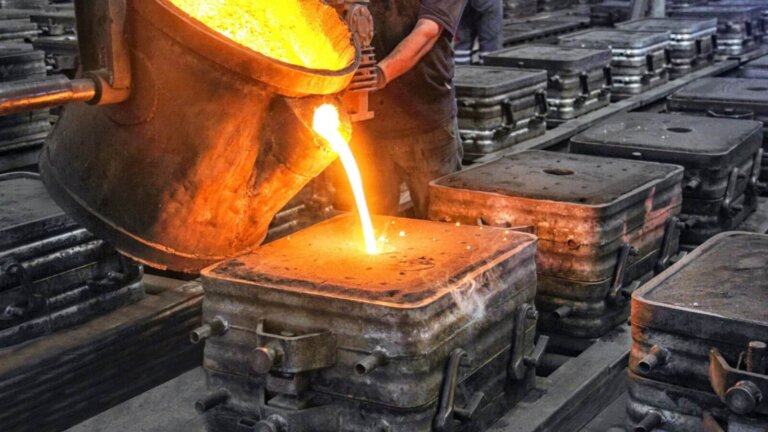
Manufacturing precision relies on disciplined process control throughout casting operations. Temperature regulation, tooling alignment, and cycle timing protect dimensional accuracy across production runs. Each variable contributes to consistent output without tolerance drift.
- Tool calibration maintains tolerance consistency
- Controlled cooling reduces internal stress formation
- Process monitoring ensures repeatable outcomes
- Mold integrity supports accurate surface definition
Stable dimensions improve assembly fitment and reduce machining adjustments. Installation becomes more efficient as components align correctly. Production efficiency increases as rejection rates remain low.
Where Do Specialized Applications Gain Advantages?
Specialized machinery benefits from castings designed for specific performance requirements. Custom tooling enables complex geometries supporting compact and efficient systems. For operations sourcing vietnam die casting, scalability aligns with precision and strength expectations. Tailored solutions integrate smoothly into complex assemblies while maintaining structural reliability. This adaptability supports industries operating under strict mechanical and performance demands.
Integration Readiness Across Complex Systems
Integration readiness ensures cast components perform seamlessly within advanced assemblies. Surface finish accuracy improves sealing and connection reliability. Precision interfaces reduce vibration transfer and alignment stress during operation. Collaboration between engineering and manufacturing teams refines compatibility over time. Such coordination quietly supports long-term stability across heavy-duty industrial systems.